Toronto Public Health (TPH) says they are investigating a possible COVID-19 outbreak at one of the federal government’s designated quarantine hotels.
The Crowne Plaza Hotel, located at 22 Carlson Court, in the Highway 27 and Dixon Road area, is the focus of the investigation, public health confirmed on Sunday.
“Toronto Public Health is aware of cases in individuals linked to this workplace,” said Dr. Vinita Dubey, associate medical officer of health. “We have assigned staff to initiate an investigation and to work with the facility to identify all cases, and review and advise on all appropriate public health measures and infection prevention and control measures.”
TPH has not said how many people may be infected with the novel coronavirus or how the outbreak began.
People travelling into Canada on an international flight are supposed to stay in a government-authorized hotel while waiting on the result of a COVID-19 test taken shortly after landing. That rule has been in place since the end of February and was brought in as part of the effort to curb the spread of COVID-19.
Anyone who breaks a rule under the Quarantine Act can face a fine of up to $3,000.
If you break your mandatory quarantine or isolation requirements and you cause the death or serious bodily harm to another person, you could face a fine of up to $1 million or up to three years in jail — or both.

Ontario’s air ambulance paramedics have raised the possibility of going on strike – an “absolute last consideration” if they can’t land an exemption from a provincial law that caps their salaries.
Unifor, the union representing Ornge workers, said Sunday that paramedics voted 94 per cent in favour of strike action, if necessary, in a vote tabulated on Friday.
Ornge paramedics have taken issue with Bill 124, which came into effect in 2019 and caps public sector wage increases to one per cent a year.
Unifor National President Jerry Dias called the wage-cap law a “foolish piece of legislation” in a virtual press conference on Sunday, adding that the one per cent bump is “well below even the rate of inflation.”
“Enough is enough,” Dias said. “We can’t keep telling people how essential they are how important (they are), and then pass legislation that takes these paramedics and puts them into a separate bucket than all the other paramedics in this province. That doesn’t make any sense.”
The union members’ vote was to determine whether they’d be willing to take strike action. If they do choose to strike, they would first have to give notice.
Dias said Unifor is putting together an essential services protocol, which would outline services that are deemed essential for paramedics.
A Unifor spokesperson said paramedics will continue to provide those services. Unifor added that a date has not been secured to mediate the negotiations of an essential services agreement with the Ontario Labour Relations Board.
Ornge said union members rejected a recent tentative agreement that complied with Bill 124.
Paramedics who work for Ornge have been without a contract since July 31.
A spokesman for the medical transportation service said he believes both parties will be able to come to an agreement.
The Ministry of Labour said in an emailed statement Sunday that it has to remain neutral on labour relations matters.
“We encourage the employer and the union to make every effort to resolve their differences at the bargaining table,” a spokesperson for the ministry said.
The Ministry of Health did not immediately respond to a request for comment.
Ornge paramedics have been instrumental in helping transfer critically ill COVID-19 patients to intensive care units across the province. They also helped implement Ontario’s vaccination plan in remote communities.
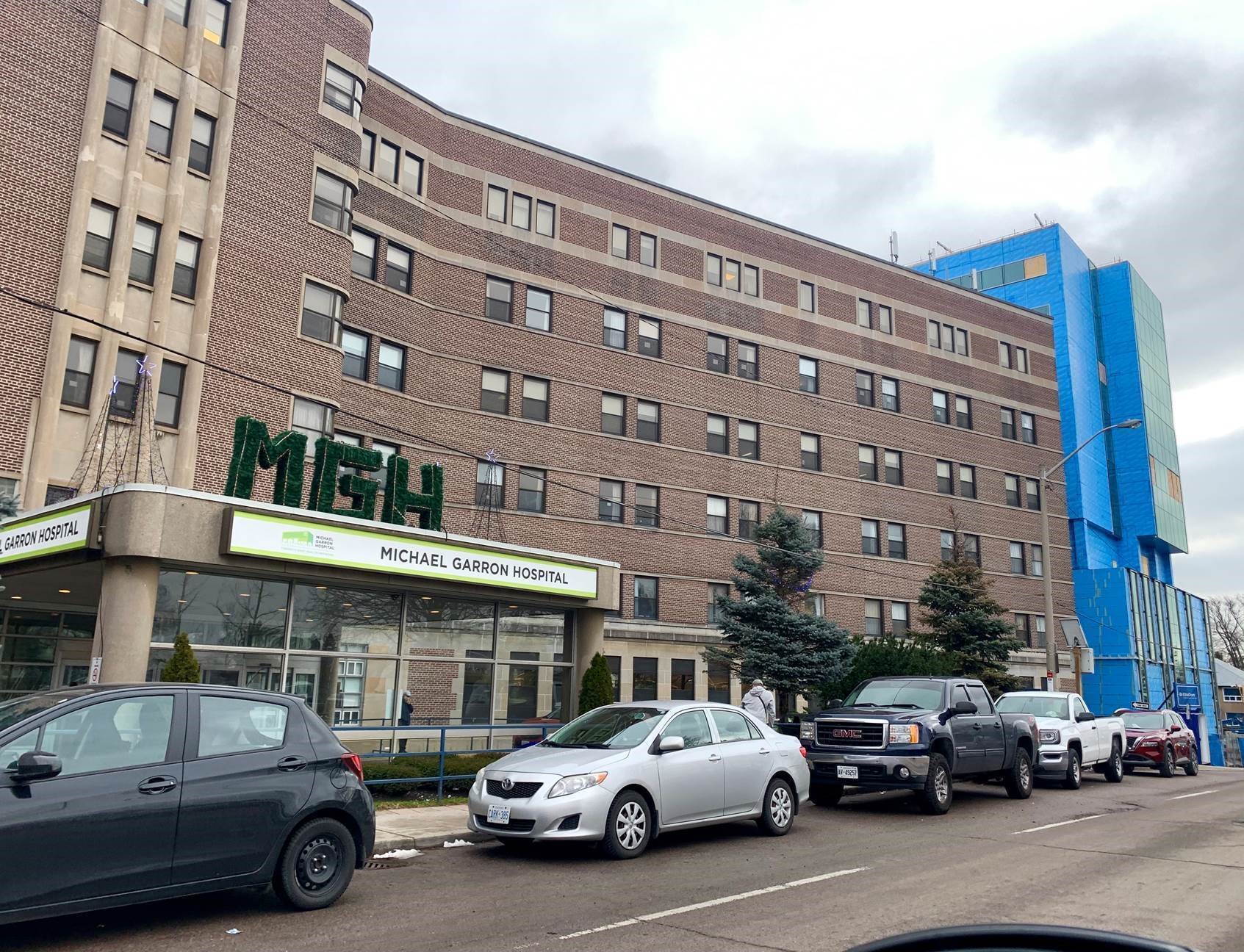
Michael Garron Hospital says it was forced to cancel some surgical procedures and divert ambulances to other hospitals to protect the supply of oxygen at the hospital.
In a statement to CityNews, the hospital said it was forced to take “precautionary measures” to preserve its oxygen resource and was working on expanding its on-site oxygen capacity.
The hospital maintained that at no time were any patients at risk.
“Early [Thursday] morning, Michael Garron Hospital identified potential risks to its oxygen supply due to the high volume of COVID-19 patients requiring oxygen at the hospital,” said Mark Fam, Vice President, Programs. “The hospital also brought on additional temporary oxygen capacity, so that all patients requiring oxygen in the hospital have what they need.”
The hospital said a “small number” of patients needed to be transferred but did not specify how many and where they were sent.
Michael Garron is currently treating 61 COVID-19 patients in its hospital.
Earlier this month, hospitals ramped down non-urgent procedures and were also given the authority to transfer patients to other hospitals without their consent by the provincial government.

Toronto Public Health has ordered the partial closure of three more businesses due to COVID-19.
The closures include The Vinyl Company on Fenmar Drive, the Canada Goose office in Scarborough and the Ellis-Don “Brixton” construction site on Dufferin Street just north of Queen Street West.
The Ellis-Don closure affects sub-contractors Torino Drywall, Inc., Tri-Clean Building Services, Inc., Zerem Electrical Services, Figure 3, and Royalguard Industries Inc.
This is the second Ellis-Don construction site affected by the public health order after its site at the Michael Garron Hospital on Coxwell Street was partially closed back on April 23.
Sixteen Toronto businesses have been shuttered since the Section 22 orders came into effect last week. The businesses will remain closed for at least 10 days and affected workers are required to self-isolate and are also unable to work at other workplaces during the isolation period.
Businesses will be ordered closed if five or more workers test positive for the virus over a 14 day period.
On Thursday, SHW Pumps & Engine Components Inc., in Brampton became the first business to be fully closed by Peel Public Health under the new orders. Ten other businesses have been partially closed in the region.
Both Toronto and Peel public health units introduced the orders last week, saying the primary objective is to separate employees from one another in workplaces where transmission of COVID-19 is identified.

The director of an Israeli ambulance service has confirmed that nearly 40 people died in a stampede at a religious festival in northern Israel.
Eli Beer, director of Hatzalah, told Army Radio that there were four to five times the number of people that should have entered a location like this. “Close to 40 people died as a result of this tragedy,” he said.
The disaster occurred at celebrations of Lag BaOmer, a holiday when tens of thousands of people, mostly ultra-Orthodox Jews, gather to honour Rabbi Shimon Bar Yochai, a 2nd century sage and mystic who is buried there. Large crowds traditionally light bonfires, pray and dance as part of the celebrations.
Prime Minister Benjamin Netanyahu called it a “great tragedy,” and said everyone was praying for the victims.
The incident happened after midnight, and the cause of the stampede was not immediately clear. Videos circulating on social media showed large numbers of ultra-Orthodox Jews packed together in tight spaces.
A 24-year-old witness, identified only by his first name Dvir, told the Army Radio station that “masses of people were pushed into the same corner and a vortex was created.” He said a first row of people fell down, and then a second row, where he was standing, also began to fall down from the pressure of the stampede.
“I felt like I was about to die,” he said.
Zaki Heller, spokesman for the Magen David Adom rescue service, said 150 people had been hospitalized and confirmed there had been some deaths.
Heller told the station “no one had ever dreamed” something like this could happen. “In one moment, we went from a happy event to an immense tragedy,” he said.
Photos from the scene showed rows of wrapped bodies.
The Israeli military said it had dispatched medics and search and rescue teams along with helicopters to assist with a “mass casualty incident” in the area. It did not provide details on the nature of the disaster.
It was the first huge religious gathering to be held legally since Israel lifted nearly all restrictions related to the coronavirus pandemic. The country has seen cases plummet since launching one of the world’s most successful vaccination campaigns late last year.
Health authorities had nevertheless warned against holding such a large gathering.
But when the celebrations started, the Public Security Minister Amir Ohana, police chief Yaakov Shabtai and other top officials visited the event and met with police, who had deployed 5,000 extra forces to maintain order.
Ohana, a close ally of Netanyahu, thanked police for their hard work and dedication “for protecting the well-being and security for the many participants” as he wished the country a happy holiday.
Netanyahu is struggling to form a governing coalition ahead of a Tuesday deadline, and the national tragedy is sure to complicate those efforts.
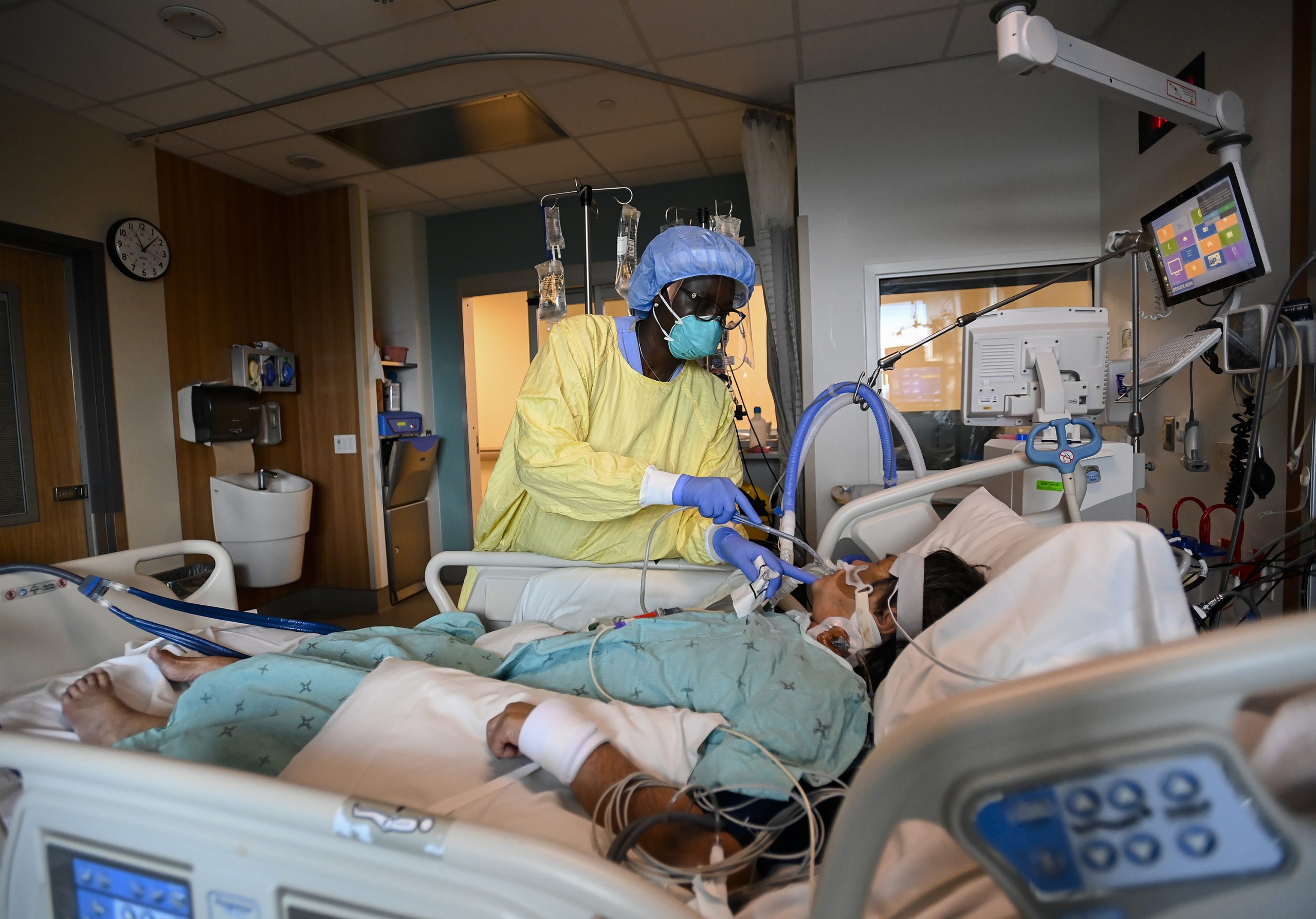
The latest data reveals that over 90 per cent of COVID-19 cases in Ontario are caused by a variant of concern, with almost all being the B.1.1.7 variant first identified in the U.K.
New modeling numbers show that while hospitalizations due to COVID-19 are levelling off, the number of patients in ICU with COVID-related critical illnesses is expected to continue rising.
ICU occupancy surpassed 800 around April 20 and under the best case scenario, the modelling suggests the numbers may come down to about 500 by the end of May. This is still not low enough to restart non-emergency surgeries for some time.
Dr. Adalstein Brown said that the number of patients in ICU was already still high as a result of the second wave when the third wave of the pandemic hit.
“It’s this occupancy of our Intensive Care Units which is such a significant threat currently to our health system,” he said.
“Our healthcare system is no longer functioning normally. We’re taking the most critically ill patients, we’re putting them in helicopters and in ambulances and moving them across the province because we’re searching for beds.”
The cumulative pandemic-related backlog of surgeries now stands at over 250,000 cases and officials say it poses an “enormous challenge.”

Further exposing the strain on the healthcare system is the fact that there has been a “dramatic rise” of patient transfers between hospitals. Dr. Brown says this is partly because some patients need to be sent to another hospital in order to get the care they need and partly due to intentionally moving patients to create more capacity in hospitals in the hardest-hit communities.
While the third wave appears to be cresting and cases are flattening, growth continues in hotspots. Peel Region showed the highest per cent positivity rate, with a seven day average of 18.1 per cent on April 24. Toronto followed at 12.4 per cent and York Region at 10.7 per cent.
Cases are decreasing faster than expected, but even in the best case scenario, cases could begin to rise in June.
In the chart below, the yellow line represents where Ontario sits currently, with a six-week stay-at-home order in place and a vaccination rate of about 100,000 people per day. The red line represents where the province would have been had the stay-at-home order not been implemented.
“So there has been a substantial control of cases due to the stay-at-home order,” said Dr. Brown.
The case counts will only dip to the levels seen in February under the best-case scenario, represented by the green line — which would require effective sick pay, a shorter list of essential workplaces, lower mobility and a continued focus on vaccinating high-risk communities.

The reproduction rate of the virus – the possibility that someone may pass on COVID-19 to another person is at 0.9, which means the province is seeing a deceleration in cases. But Dr. Brown said it was important to remember that case counts remain very high.
“If we start to relax public health measures, after say six weeks which would have started on April 8, you can see there is a potential for an increase in cases again which can be quite dangerous given that our ICUs have not yet started to empty out in any way,” said Dr. Brown.
The data also shows that Ontarians are respecting the stay-at-home order, but workplace mobility is still too high. Brown said “limiting essential workplaces and keeping sick workers at home will help control cases.”
Vaccination numbers continue to grow and more than 4.5 million doses have now been administered in the province.
Around 36.6 per cent on Ontarians have received at least one dose of the vaccine, with the largest demographic still waiting for the first dose falling in the under 50 category.
Dr. Brown reiterated that prioritizing hotspot communities for vaccinations will help control the virus across the entire province.
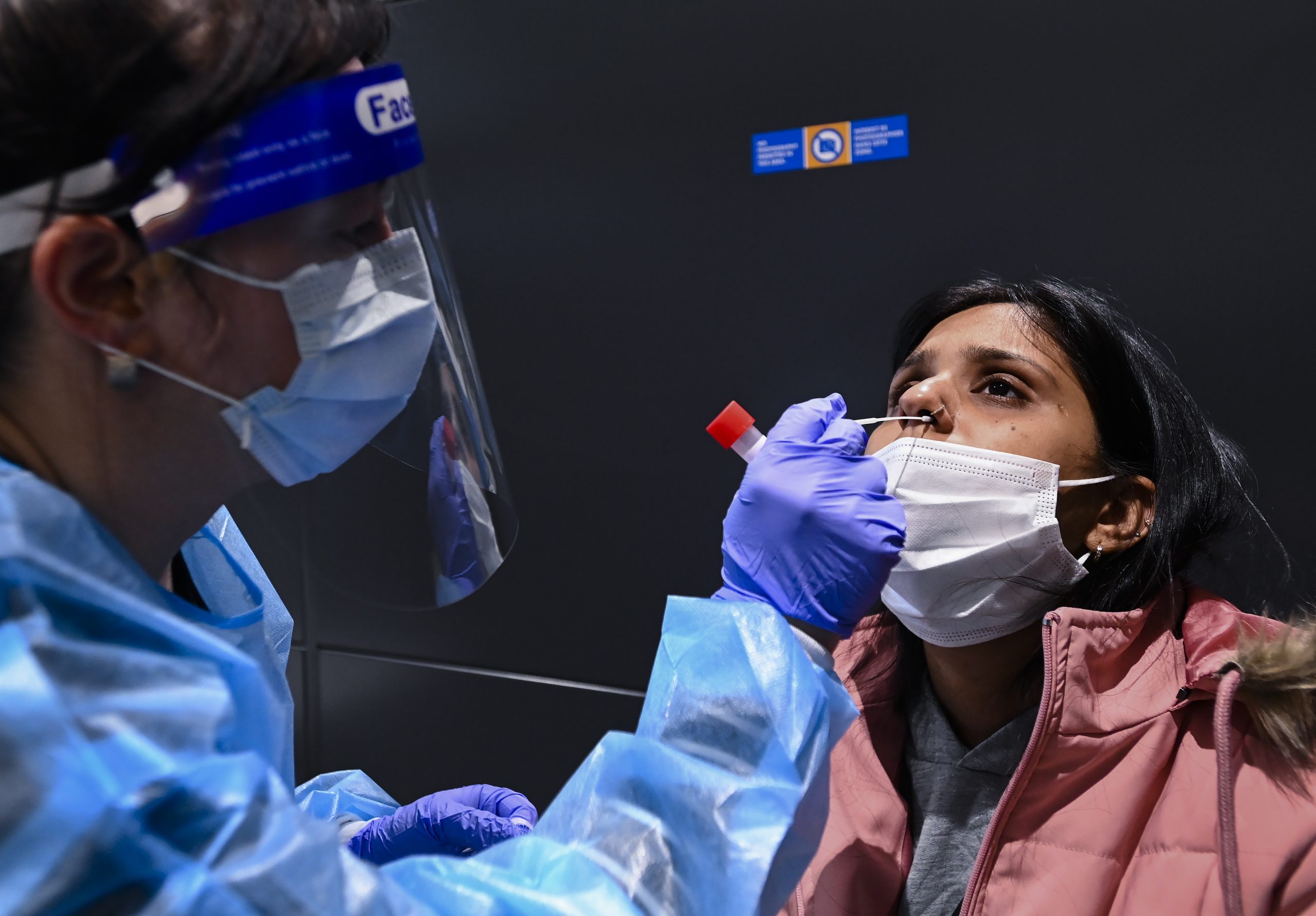
More than 2,000 people returning to Canada since the federal government brought in mandatory hotel quarantines have tested positive for COVID-19 and more than a quarter of them were infected with a variant of concern.
Data supplied to The Canadian Press by the Public Health Agency of Canada show that between Feb. 22 and April 22, 557 international air travellers tested positive for a variant of concern. Most of them, 518 cases, are the B.1.1.7 variant first identified in the United Kingdom, which is the dominant variant in Canada.
Another 27 passengers tested positive for the B.1.351 variant first identified in South Africa, and 12 tested positive for the P.1 variant identified in Brazil.
The viruses mutations become “variants of concern” when they are confirmed to spread more easily, cause more severe illness or be resistant to known treatments or vaccines.
Data is not available to show if those passengers are believed to have infected anyone after arriving, but at some point, all of those variants arrived in Canada via travellers, and then spread. There are now almost 95,000 confirmed cases of B.1.1.7, as well 578 cases of B.1.351 and more than 2,000 of P.1.
Those numbers have opposition parties and provincial governments begging Ottawa to take even more steps to keep travellers from bringing COVID-19 into Canada with them.
“I’m pleading with the federal government to stop all non-essential travel to Canada before new variants overwhelm our ICUs completely,” Ontario Premier Doug Ford wrote on Twitter April 24.
Last week, Canada did bar flights from India and Pakistan for a month after too many planes landed carrying infected people. But they are far from the only source.
Between April 7 and April 24, the public health agency identified 165 flights from 19 countries, with at least one passenger who later tested positive for COVID-19.
Forty-three of the flights came from India, 29 from the United States, 30 from Europe and 17 from the United Arab Emirates. Only one flight originated in Pakistan.
Epidemiologists agree the border measures should be strengthened, but say keeping COVID-19 from spreading requires more than just border closures.
“I think the border control restrictions and monitoring is only the beginning, it’s only one cure,” said University of Saskatchewan epidemiology professor Nazeem Muhajarine.
“It has to be complemented with a whole suite of measures. That alone is not going to actually amount to anything, really.”
He said rapid testing and good contact tracing is a must, as is swift action to contain outbreaks when they are identified.
Ottawa has required a two-week quarantine for international arrivals since March 2020, but only since Feb. 22, have air passengers had to spend three days of that in a quarantine hotel. As the variants arose, Canada also began requiring negative COVID-19 tests before boarding a plane, and from air and land border travellers upon arrival.
Another test is now required at day eight. It was day 10 until April 23.
Health Canada has not been able to provide data for how many passengers tested positive after leaving hotel quarantine. It also can’t provide test results for any of the 297 people who paid a $3,000 fine for failing to stay in the quarantine hotel.
Susanne Gulliver, an epidemiologist at NewLab Clinical Research in St. John’s, N.L., said part of the issue is that for all land travellers, and for most of the quarantine period for air passengers, they’re on their own.
Australia, New Zealand, Singapore and South Korea, all with much lower COVID-19 rates than Canada, require travellers to quarantine for two full weeks after arriving.
Gulliver said three days with supervised quarantine is not enough.
“It should be supervised for the entirety, for both their protection and the protection of the public,” she said, noting if someone gets sick in quarantine they can be monitored to ensure they get medical help if they need it.
Prime Minister Justin Trudeau defends the government’s policies as among the strongest in the world, and says most of the travellers are Canadians who cannot be refused entry.
He also said less than two per cent of all Canada’s confirmed cases of COVID-19 are from travellers, or someone who came into contact with a traveller.
Muhajarine said however that a single case from a traveller, can infect several people in Canada which starts a cascade of community spread that aren’t labelled as travel cases once they’re passed on more than once.
Muhajarine and Gulliver both point to the Atlantic bubble as a place where restricting entry, even to Canadians from other provinces, worked well because they were accompanied by quick government action to lock things down if an outbreak occurred.
Gulliver noted quick action shut down an outbreak of the B.1.1.7 variant in Newfoundland in February. Nova Scotia implemented a provincewide lockdown Wednesday the day after a record 96 cases were reported in the province.
Australia is similar. Perth and a neighbouring region brought down the hammer for three days recently after just two cases were reported. Similar lockdowns have happened many times in Australia, which has confirmed fewer than 30,000 cases of COVID-19 overall, a rate of 117 for every 100,000 people.
Canada, conversely, has 1.2 million cases, a rate of 3,200 for every 100,000 people.
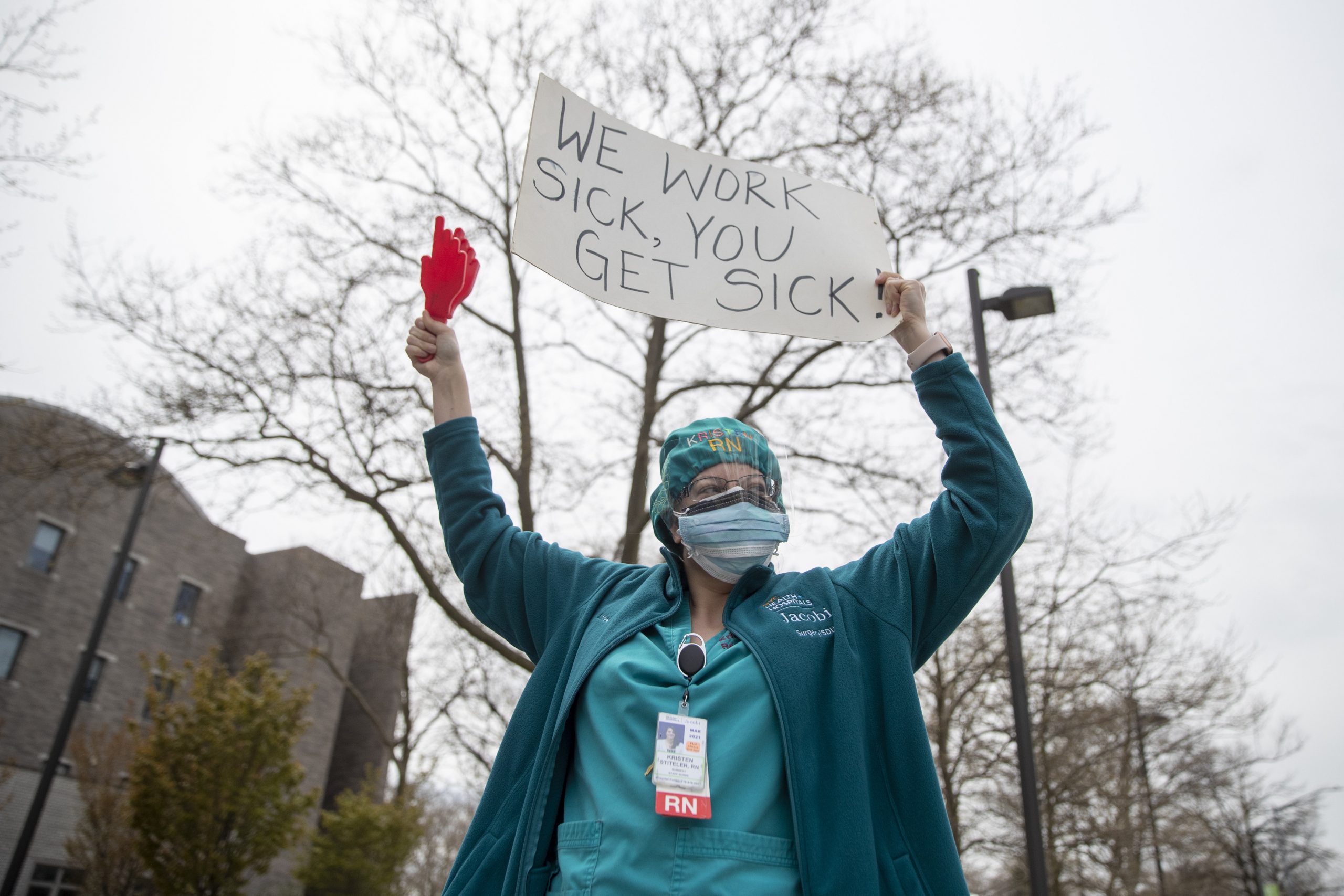
The Ontario government has announced they will be mandating three paid sick days and has offered to boost the federal sick-leave program to $1,000 per week to those eligible.
Provincial Labour Minister Monte McNaughton made the announcement Wednesday and said the legislation, if passed, would require employers to pay employees up to $200 per day for three days. The program, which is available to full and part-time employees, will be retroactive to April 19 and be effective until Sept. 25.
The province is partnering with the Workplace Safety and Insurance Board (WSIB) to deliver the program and reimburse employers.
The program is expected to cost the province between $750 million and $1.5 billion.
Ontario has also offered to boost the federal Canada Recovery Sickness Benefit (CRSB) from $500 to $1,000. In a statement, Finance Minister Peter Bethlenfalvy said they are continuing to discuss the province’s top-up of the program with the federal government.
“We believe that this is the simplest and fastest way to increase program uptake and make this program more effective for those people who need this program most,” read the statement.
The federal government has not committed to this agreement at this point and had previously said Ottawa will help when Ontario is ready to mandate a sick-leave program for provincially regulated businesses.
In a statement, press secretary for the office of the Deputy Prime Minister and Minister of Finance, Katherine Cuplinskas reiterated that sentiment saying “we will be there to help Ontario with its program.” She added that they are “pleased” that Ontario is ready to mandate sick leave in provincially-regulated businesses, “as we have done for federally-regulated businesses since 2019.”
“The federal wage subsidy was designed – and is already set up – to provide employers with financial support to pay the wages of workers who are on sick leave,” she said. “Our priority is protecting lives and ensuring no one needs to put themselves or others at risk if they feel sick. We will continue to be there for Canadians – as we have been since the start of the pandemic.”
Critics were quick to note, however, that three paid sick days were far less than the 10 to 14 days health professionals recommend for a period of self-isolation due to COVID-19.
NDP Leader Andrea Horwath said the government’s policy “simply will not cut it.”
“(Workers) will be left making pretty much the same kind of calculation that they’re being forced to make now, which is, ‘I’ve got the sniffles, I’m not feeling all that great … but I have to go to work because I don’t have financial security to stay home’,” she said.
Horwath said her party needed to see the government’s legislation before deciding whether to support it, but added that it appeared inferior to an NDP private members’ bill to introduce 10 paid sick days.
Green Party Leader Mike Schreiner said he was shocked that after months of pressure, the three-day policy was all that the Ford government introduced.
He called on the the premier — who is in self-isolation after being exposed to a staff member with COVID-19 — to change the legislation to provide at least 10 paid sick days.
“I was hopeful that after the premier took taxpayer-funded paid sick days to isolate after a workplace exposure, he would have had a change of heart,” he said. “But Ford’s plan falls well short of providing the protection workers need.”
The CEO of the Registered Nurses’ Association of Ontario said the government’s sick-leave program will not be enough to prevent further illness and outbreaks and will further extend the third wave of the pandemic.
Doris Grinspun said employees will use the three days but could return to work sick.
“Three days is insufficient to stop it,” she said. “Therefore, we will continue with this for a couple of months at least.”
The president of the Ontario Chamber of Commerce called the new program a “step in the right direction” but recommended enhancements.
“Any paid sick-day program must be fully and immediately accessible to workers who need it with a quick and seamless reimbursement for employers,” Rocco Rossi said in a statement. “When workers protect themselves, they protect their colleagues, their employers, and their communities.”
Dr. Michael Warner at Michael Garron Hospital, posted a video to Twitter breaking down the numbers and highlighting how paid sick days would directly impact the family of one of his patients.
The recent COVID-19 death of a 13-year-old Brampton, Ont., girl whose father is an essential worker, renewed calls for an Ontario program.
Horwath said it’s clear the federal government had “rebuffed” the province’s request.
“That’s not going to stop the spread of COVID-19 in workplaces and it’s not going to stop the deaths,” she said.
Meantime, the Ford government announced Wednesday that hospitals in Ontario will now be able to transfer patients waiting for a long-term care bed to any nursing home without their consent in an effort to free up space.
Health Minister Christine Elliott says the government has issued a new emergency order to allow for such transfers.
With files from Lucas Casaletto

A Toronto police program that pairs officers with mental health nurses is expanding.
At a time some are questioning whether police should be the ones responding to mental health calls, changes are in the works for the mobile crisis intervention unit.
“The expansion is for the community and for the mental health community,” said Deputy Chief Peter Yuen, of the Toronto Police Service.
Last year, the mobile crisis intervention teams (MCIT) responded to 7,500 of the about 40,000 annual person-in-crisis calls. This year, the partnership between police and local hospitals will be available for more hours every day.
“We’re expanding from 10 hours on the road a day to 14 and a half hours,” said Leah Dunbar, project manager of the mobile crisis intervention team at Michael Garron Hospital.
There will also be 12 teams on the roads for seven days a week, plus a downtown team four times a week.
“We’re able to see more people and provide them with those supports,” said Dunbar.
With the expansion, the teams are expected to handle more than 11,000 calls.
The teams are also planning a new look, including uniforms and vehicles that look less like traditional police cars. Yuen says the changes are meant to take the stigma away from community interactions with crisis teams.
“These are things that were asked of us from the community,” he said.
The expansion comes as calls to defund police have intensified.
Police in the GTA have been scrutinized for their handling of mental health calls, which in some cases have ended with officers killing people in crisis.
“We also understand mental health response shouldn’t solely be a police-led type of incident,” said Yuen. “We’re the only service available 24/7, certainly we support non-police responses and we will do everything we can to collaborate with other agencies.”
Yuen says the force is working with communities, adding that the service shifted existing funding into this expansion. MCIT training has also doubled to 80 hours, with an emphasis on de-escalating tense situations.
“We’re able to include things such as autism spectrum disorder, major mental health disorders, trauma-informed care, patient advocacy,” said Dunbar. “We’ve really been able to enhance the course.”
“We can’t ever have enough communication skills,” said Yuen. “And also understanding intersectionality of racialized communities, anti-black racism, anti-indigenous racism, implicit bias — these are all the new things we have included in training.”
Yuen also said that the MCIT will help connect people to community-based services and programs, instead of diverting them to hospitals, which are currently overwhelmed with COVID-19 patients.
The police service is also launching a downtown 9-1-1 pilot project, hoping to centralize access to community agencies. Yuen is optimistic that at times, officers won’t be required at calls.
“It will be a collaborative effort between 9-1-1 call takers and crisis workers to determine how these calls should be triaged and who should be attending,” explains Yuen.
More details on the 9-1-1 pilot are expected to be released in May.

The Toronto Maple Leafs booked their ticket to the Stanley Cup Playoffs for the fifth straight year following a 4-1 win over the Montreal Canadiens on Wednesday.
Heading into the game, Toronto needed a regulation win to clinch a playoff spot after the Ottawa Senators earned a regulation victory over the Vancouver Canucks earlier in the day.
Goals from William Nylander, Auston Matthews, Jake Muzzin and Adam Brooks lifted Toronto over Montreal, who got a lone tally from Nick Suzuki. Matthews’ goal gave him 35 on the season, leaving him atop all NHL goal-scorers in 2020-21.
Leafs winger Joe Thornton, who set the record as the oldest player in franchise history to score when he found the back of the net Saturday, helped set up Muzzin’s goal to become just the seventh player in league history to register 1,100 career assists.
Thornton joined Wayne Gretzky (1,963), Ron Francis (1,249), Mark Messier (1,193), Ray Bourque (1,169), Jaromir Jagr (1,155) and Paul Coffey (1,135) as the only players in NHL history to crack 1,100 assists.
With the win, the Maple Leafs remain atop the North Division with 67 points. They will now try to wrap up their first division title in 21 years.
Toronto have earned a post-season berth in each year since 2016-17, Matthews’ debut season, but have yet to make it out of the first round.
The Leafs and fourth-place Canadiens – set to go head-to-head three more times before the end of the regular season – look poised to meet in the playoffs for the first time since 1979.
Toronto will now turn its immediate attention towards a two-game series at home beginning Thursday against the Vancouver Canucks, while Montreal, which remains six points up on the Calgary Flames for the North’s final post-season berth, hosts the Winnipeg Jets on Friday before the Ottawa Senators come to town Saturday.
Files from The Canadian Press were used in this report